

A passionate team
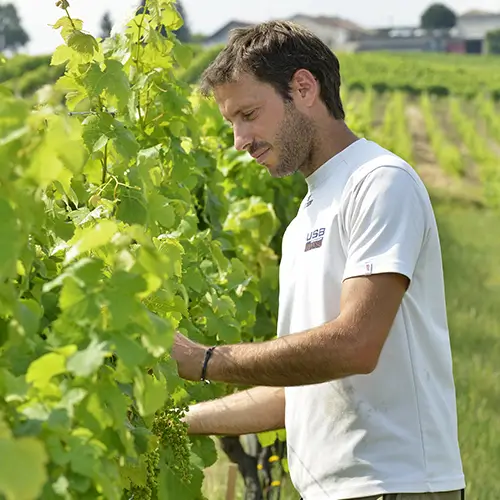
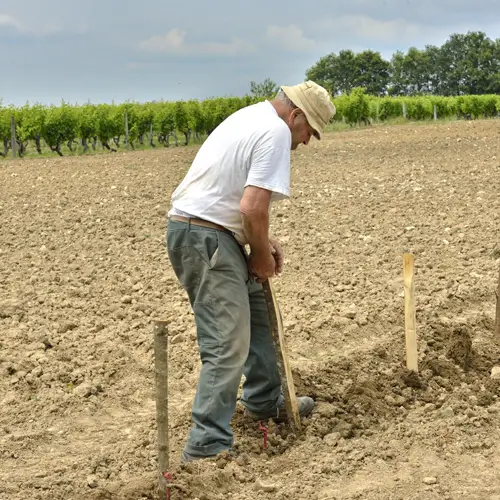
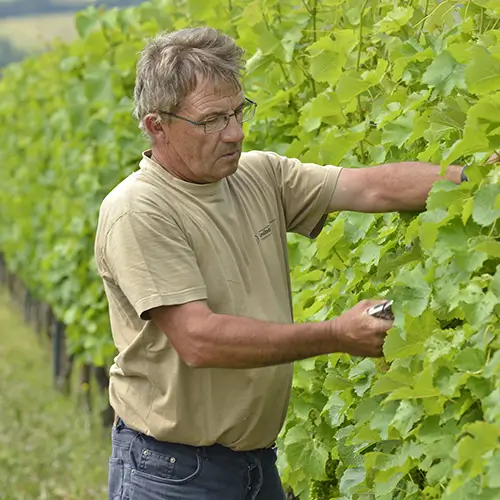
The Cave Coopérative de Monbazillac brings together around forty winegrowers, each cultivating their own plots of land.
The grapes are then taken to the common cellar, where they are vinified. Qualified technicians are employed to manage the equipment and market the wine.
As co-owners of the cooperative, the winegrowers adhere to a sustainable, non-speculative, locally based economic model. This system is based on the sharing of power and wealth, guaranteeing each member an equal voice, whatever the size of their vineyard. This means that everyone can be involved in decision-making, from farm management to the administration of the cooperative.
Our commitments to sustainability
As winemakers, producers and farmers, one of the fundamental challenges of our generation is to protect the environment. We need to strike a balance between production and protection.
Reducing the use of phytosanitary products
At the Cave Coopérative, various projects are being carried out to find alternatives to phytosanitary products and thus protect the environment, biodiversity and the men and women who work in the vineyards every day.
The Bat’Viti project: install nesting boxes for bats
Bats are particularly fond of insects (eating around 1,000 in a single night) and particularly the European grapevine moth, which is a major concern (as the caterpillars make holes in the berries). Set up under the expert guidance of the Aquitaine Conservatory of Natural Spaces, the Agricultural Observatory of Biodiversity and the Chamber of Agriculture, the pupils took part in building the nesting boxes and installing them in the vineyards..
Mating disruption: a natural method
The principle is simple: imitate nature! To prevent the moths from reproducing, pheromone-coated wires are installed in the vines. The pheromones are released into the air and disrupt encounters between males and females… and thus reduce reproduction of the species..
High Environmental Value certification
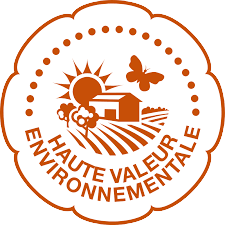
Do you know this logo? It represents High Environmental Value (HVE) certification.
You’ll find it on products from farms committed to the environmental transition of agriculture. It focuses on four areas: